
7 reasons why our riders return year after year...according to a recent participant of our BC "Sea to Sky" trip.
1. The sense of freedom – all I have to
worry about is getting to the end of each day in one piece. And that itself is
hardly a worry as I had complete faith in our Big Mountain Bike Adventures' guides not pushing as past
our abilities. Just getting on that bike in yet another exquisite location and
just turning the pedal – what a privilege !
2. The sense of
actually experiencing the country , not just being an observer from a vehicle .
Similar I guess to hiking but I think the added adrenalin further connects you
to your environment.
3. The balance
between exercise , great food, good sightings , special
accommodation
– in fact I think you have got the balance pretty perfect for a bunch of
middle-agers trying to stay in touch with our youth !
4. The riding was
wonderfully varied and always seems to have one testing day, just lovely. Exactly what we need to remind us just to go out and do
it.
5. Then of course the
fun of spending time with our friends. Somehow there is a constant cocktail of
irreverent mischief that follows this group. And this is where I would most like to compliment your guiding style – you
calmly dealt with too much noise , terrible language and generally poor
behaviour , without so much as developing a nervous tic.
6. The local guides
all add a special touch to the day – we just know we are going to experience
the best the terrain can offer.
7. I personally
thought this trip offered us the best mix of all of the element of the previous trips , including
the culture on offer!
Saturday, February 27, 2016


Wednesday, February 17, 2016
One of the best trails in the world is threatened by a new road in Peru.
Progress...
Since we first rode this trail nearly a decade ago we've been preaching that it's one of the best. Not just one of the best, but one of the best on the planet. It's called Olleros and the stats are impressive: 56 kms long, start at 3700 meters, end on the Pacific shore. 11,000 foot descent of arid goodness with sections like a pump track that lasts 15 minutes on a spectacular high-alpine ridge. Just last week we received word from our guides that a new road is being built and the trail wont be as it was. Those of you who joined us over the years and rode this one, it's now just a memory! The good news is that we're replacing the Olleros trail with another amazing called Villa Quipan...38 kms long, 9842 feet descent...no slouch at all. And as our guides tell us about Villa Quipan, "one of the most amazing trails in the Andes."
What are you doing this spring? Come join us April 15-24, 2016. Click here for the details.

Since we first rode this trail nearly a decade ago we've been preaching that it's one of the best. Not just one of the best, but one of the best on the planet. It's called Olleros and the stats are impressive: 56 kms long, start at 3700 meters, end on the Pacific shore. 11,000 foot descent of arid goodness with sections like a pump track that lasts 15 minutes on a spectacular high-alpine ridge. Just last week we received word from our guides that a new road is being built and the trail wont be as it was. Those of you who joined us over the years and rode this one, it's now just a memory! The good news is that we're replacing the Olleros trail with another amazing called Villa Quipan...38 kms long, 9842 feet descent...no slouch at all. And as our guides tell us about Villa Quipan, "one of the most amazing trails in the Andes."
What are you doing this spring? Come join us April 15-24, 2016. Click here for the details.

Monday, May 11, 2015
Update on Travel to Nepal.
This is a message from our guides, partners and staff in Kathmandu.
Dated: May 10, 2015.
We've had so many messages from around the world checking in on us and the situation here, there's a lot of love for Nepal and people want to help. We're doing our bit here and we would like to ask that you also help Nepal in this time of need, by doing what you're good at.
Huge efforts are going into getting emergency shelter and food out. Local NGOs and businesses, private individuals and groups just mobilized in any way they could to get food and shelter out to where it is needed. It has been amazing. Yet it’s just a drop in the ocean. I am sure you have seen pictures or read about whole villages flattened – it’s just surreal to sit here in Kathmandu (which is amazingly functional) writing to you about this.
All of our guides, staff and their families are ok, even though houses damaged and people are sleeping outside. We have been able to distribute tents and food and will be doing more – what we can while still paying our staff their salaries and ensuring jobs for our team in the future. The team has been busy getting the relief materials sent out, providing logistical support to get a field hospital up and running, looking for areas of need and how we can help and fundraising for local NGOs. This is all on top of their own obligations to their family’s safety in a disaster zone.
Some areas are still in 'relief' stage, we're even hearing of areas, still, that have not been reached at all. Then some have already moved past that, rebuilding has started in Kathmandu. Donating money is the key to the initial relief stage and please let us know if you would like further information on where/how to donate as not all organizations are equal.
Next is the rebuild. Even more mind boggling than the relief needs, it's looking like 500,000 houses will need to be rebuilt. People who have lost everything must try to rebuild their lives when skilled labour (for safe building) will likely be in short supply.
Of course tourism is our thing so we have a vested interest, but we know that it is an essential part of rebuilding Nepal, giving hope in the form of jobs and income with which to rebuild shattered lives. Foreign aid and handouts are necessary initial stages, but true sustainable rebuilding requires jobs.
So please help us get the message out that Nepal is a good travel choice, as time spent here will be helping people to rebuild by sustaining jobs and hope. It has been said that one tourist provides nine people with jobs, which is an incredible amount, nine families that have some hope for every single tourist that visits. We mean of course ethical travel that is safe and respectful for the travelers and the people of Nepal. Travel that brings in much need revenue to the country to sustain fair salaries and wages. Travel that is not voyeuristic and hence would not go to the affected areas, but will spread the income as far as possible through jobs and income.
Please help us by spreading the word about what an amazing destination Nepal is and how helpful ethical tourism can be to rebuild Nepal!
Timing is important, and right now is not the time to come but plan to come. With the progress already made it is estimated that the airport will be completely back to normal and most international relief workers gone in a month. Nepal is still an incredible destination and the images portrayed in the media are very localized.
We have two departures to Nepal this fall on our incredible Himalaya Heights trip: October 9 and November 9. Get in touch with us!
Thank you in advance for your support. From our team in Kathmandu and beyond.
Dated: May 10, 2015.
 |
| Photo: Dan Barham |
Huge efforts are going into getting emergency shelter and food out. Local NGOs and businesses, private individuals and groups just mobilized in any way they could to get food and shelter out to where it is needed. It has been amazing. Yet it’s just a drop in the ocean. I am sure you have seen pictures or read about whole villages flattened – it’s just surreal to sit here in Kathmandu (which is amazingly functional) writing to you about this.
All of our guides, staff and their families are ok, even though houses damaged and people are sleeping outside. We have been able to distribute tents and food and will be doing more – what we can while still paying our staff their salaries and ensuring jobs for our team in the future. The team has been busy getting the relief materials sent out, providing logistical support to get a field hospital up and running, looking for areas of need and how we can help and fundraising for local NGOs. This is all on top of their own obligations to their family’s safety in a disaster zone.
Some areas are still in 'relief' stage, we're even hearing of areas, still, that have not been reached at all. Then some have already moved past that, rebuilding has started in Kathmandu. Donating money is the key to the initial relief stage and please let us know if you would like further information on where/how to donate as not all organizations are equal.
Next is the rebuild. Even more mind boggling than the relief needs, it's looking like 500,000 houses will need to be rebuilt. People who have lost everything must try to rebuild their lives when skilled labour (for safe building) will likely be in short supply.
Of course tourism is our thing so we have a vested interest, but we know that it is an essential part of rebuilding Nepal, giving hope in the form of jobs and income with which to rebuild shattered lives. Foreign aid and handouts are necessary initial stages, but true sustainable rebuilding requires jobs.
So please help us get the message out that Nepal is a good travel choice, as time spent here will be helping people to rebuild by sustaining jobs and hope. It has been said that one tourist provides nine people with jobs, which is an incredible amount, nine families that have some hope for every single tourist that visits. We mean of course ethical travel that is safe and respectful for the travelers and the people of Nepal. Travel that brings in much need revenue to the country to sustain fair salaries and wages. Travel that is not voyeuristic and hence would not go to the affected areas, but will spread the income as far as possible through jobs and income.
Please help us by spreading the word about what an amazing destination Nepal is and how helpful ethical tourism can be to rebuild Nepal!
Timing is important, and right now is not the time to come but plan to come. With the progress already made it is estimated that the airport will be completely back to normal and most international relief workers gone in a month. Nepal is still an incredible destination and the images portrayed in the media are very localized.
We have two departures to Nepal this fall on our incredible Himalaya Heights trip: October 9 and November 9. Get in touch with us!
Thank you in advance for your support. From our team in Kathmandu and beyond.
Friday, November 14, 2014
Never stop exploring: the Yukon Territory.
For years I’d heard the stories from close friends
who’d lived in the Yukon, friends who described the place passionately with hands
and arms flailing and eyes wide open and alive, “the views are like nothing
you’ve ever seen with endless untouched forests, pristine rivers and lakes and
big and inviting mountain ranges everywhere,” they’d tell me. “You can
basically walk out your door to 1000 miles of nature all around you.” I
listened with keen interest as I’ve always been into outdoor adventure.

And
then came the larger-than-life stories of characters that they’d met in the
Yukon. “There’s this one guy that I became friends with who’s a total animal on
skis,” recalled Anthony, who’s now back in Montreal. “Basically he was this unknown
and unassuming guy who all but walked out of the woods and decided on a whim to
compete in a national cross-country race and he destroyed the world-class field
of competitors. And he did the same thing in a cross-country mountain bike race
too. We climbed and skied all kinds of mountains together - you have to meet
him!” The stories continued, the years passed and as it happens, these friends of
mine no longer live in the Yukon.

Then I met Ray. Ray is one of the most passionate
and warm-hearted people that I have ever crossed paths with. And guess what? He
told me similar stories – the epic adventures to be had, the amazing people and
the unreal natural landscape all around. And just like my friends before, when
he described the Yukon he spoke with reckless passion – arms flailing and eyes
glowing - he was practically dancing when he talked about the place. Then he
invited me up, and I went. We mountain biked and our trip was magical.

Thursday, February 27, 2014
Pure riding indulgence.
Food and mountain biking find their heavenly match in Liguria, Italy
By Vince Shuley.
“Buon
giorno!” Antonio greets me heartily as he looks up from watering his plants,
smiling. Our host and chef at the agriturismo "A ca Vegia" doesn't
speak a word of English — the norm for most people of the older generations in
Italy — but I can tell by his gestures towards the green valley bathed in sun
that he is admiring another perfect-weather day in Liguria.
 |
| Downtown Finale Lirure is beautiful. |
Our
hilltop retreat at A ca Vegia overlooks the township of Finale de Ligure, one
of the many towns along the Italian Riviera. Finale is the first stop on Big Mountain Bike Adventures' Bella Rivera DH, a week-long downhill mountain bike
tour of the Ligurian coast shuttling some of the country's finest trails, and
gorging on arguably the best home cooking in the world.
Mountain biking has existed here since the early '90s with many of Italy's cross-country
racers using the hills surrounding Finale as a training ground. But after
Canadian freeride pioneers Brett Tippie, Wade Simmons and Richie Schley
(namesake for Whistler Mountain Bike Park's "Schleyer" trail) visited
Finale to film for the Kranked film series in 1999, the local mountain bikers
began to put shovels in the dirt to build their own downhill-centric descents.
 |
| Guide extraordinaire Louise. There's no one better to show you the trails, and more. |
"(The
Kranked crew) rode XC trails jumping from one side of the trail to the other,
playing around and having so much fun with their bikes," said Allesandro
Molini, a born and raised Finale local and guide for Big Mountain Adventures.
"It
was an explosion. After that (the locals) started to build trails just for
fun."
Finale
de Ligure has since become a popular destination for British and European
mountain bikers looking for easily accessed trails and reliable, sunny weather.
Trails range from berm-filled downhill descents, jumps and stunts to the 2013
Super Enduro course, all with views stretching along the beaches of the
Ligurian Sea.
With
as many shuttles as our group can handle, for two days we sample trails that
finish either in the town or on the beach, the locals barely noticing trains of
riders donning full face helmets and body armour. Bikers are welcome here,
providing much needed tourism after years of declining mainstream tourist
visits to Italy.
 |
| Mid-descent. Yes, that's Finale Ligure way way down there on the Med. |
A
new destination is on the cards tomorrow, requiring a send off from the
hospitable folks at A ca Vegia. Glasses of Prosecco clink as another gargantuan
four course meal emerges from Antonio's kitchen.
Good
thing we don't have to pedal uphill tomorrow.
The Witching Hour
Driving
west along the coast and turning up the steep Valle Argentina, we soon arrive
at the tiny crow's nest village of Triora. A dark history permeates the alleys
and cobblestone streets, testament to the brutal witch trials held by the Holy
Inquisition in the late 16th Century. Today the locals celebrate the morbid
legacy of putting the witches on trial and burning witches by selling
wart-nosed witch dolls and Halloween decorations year round, as well as
celebrating several witch-themed festivals throughout the year.
The
steep walls of the valley meant most paths were originally built to traverse
the hillsides, used by hunters stalking game and peasants harvesting the
numerous chestnut plantations. But the trails are not without their challenging
sections; rocks and roots protrude out of the soil and the exposure off to the
side requires disciplined braking and line choice. Ancient medieval bridges and
simple stone shrines honouring the Virgin Mary are just a few of the historic
treasures we pass by as we descend towards the valley floor.
 |
| Nice spot to be at the end of the day. |
We
break for lunch in Triora's town square, the iron sculpture of a hooded witch –
complete with cauldron and broomstick – overseeing our four courses of
bruschetta, meats and cheeses, pasta and tiramisu. I order a double espresso to
shake off the afternoon fatigue, but our first ride after lunch turns out to be
a spectacular wake up call.
We
descend directly from the restaurant in Triora to the satellite village of
Molini, bikes buzzing down the vacant stone walkways. Riding through the town's
deserted cobble-stoned alleys with cats scattering into the shadows, you can't
help but feel that the souls of those "witches" haunt the place
several centuries later.
The
hills have their share of history as well. During World War II the area was a
staging ground for the guerrilla attacks against Italy's fascist rule, the
roads that provide such convenience for shuttling mountain bikers were refined
by Nazi Germany to move troops and armour faster inland from the Mediterranean.
Now the majority of traffic is relatively peaceful with shuttle vans and
motorcycle groups.
 |
| A SUPER fun trail deep in Europe's largest beach forest. |
The
Santo Spirito Hotel is our dinner and bed for the next two nights, and its
chefs have been hard at work to give our hungry group of mountain bikers the
meals of our lives, which after Antonio's magic will not be easy.
Two
more days of riding and eating lay ahead of me. Without a single hill to climb
on this mountain bike vacation, I'll be needing an endurance of a different
kind.
For
more information on this trip and more, head to the Big Mountain BikeAdventures
Click here for Bella Riviera DH trip details, and here for Dolce Vita all-mountain trip details.
Friday, December 20, 2013
10 YEARS.
This is a photo compilation that was posted on Pinkbike.com back in May of this year. We figured that since the year was coming to an end we'd bring it back. Enjoy!
This photo-essay shares a few highlights from Big Mountain Advenures (BMA), the Whistler-based mountain bike tour company that turns 10 this year. This is a brief history for Big Mountain, but really its roots started growing back in the early-70's...
 Circa 1977, BMA founder Chris Winter getting a taste of cycling tours
from the back of his dad's custom tandem on a month-long camping trip
with 30 high school kids. Winter's pioneering parents started running
road bike trips in 1972 to Europe and Canada's maritime provinces. The
company, called Cycleventures still exists today, 41 years later.
Circa 1977, BMA founder Chris Winter getting a taste of cycling tours
from the back of his dad's custom tandem on a month-long camping trip
with 30 high school kids. Winter's pioneering parents started running
road bike trips in 1972 to Europe and Canada's maritime provinces. The
company, called Cycleventures still exists today, 41 years later.
 The wheels were set in motion for the idea of developing an
international mountain bike travel company during the winter of 2001
while eating fondue and drinking wine in a little chalet perched above
the town of Haute Nendaz, in the Swiss Alps. Winter met local Francois
Panchard earlier that year on the internet as he researched riding
options in the French-speaking part of Switzerland. The two hit it off
like old friends and realized that they both shared a passion for
mountain biking and exploring new terrain. In this 2002 photo, Paddy
Kaye, Ryan Bowland & Winter ride the Col de Mines, Verbier,
Switzerland.
The wheels were set in motion for the idea of developing an
international mountain bike travel company during the winter of 2001
while eating fondue and drinking wine in a little chalet perched above
the town of Haute Nendaz, in the Swiss Alps. Winter met local Francois
Panchard earlier that year on the internet as he researched riding
options in the French-speaking part of Switzerland. The two hit it off
like old friends and realized that they both shared a passion for
mountain biking and exploring new terrain. In this 2002 photo, Paddy
Kaye, Ryan Bowland & Winter ride the Col de Mines, Verbier,
Switzerland.
 On this first exploratory trip Panchard eagerly dragged Kaye, Bowland
and Winter all over his local mountains, linking up rides with buses,
trains, lifts and a shuttle truck. Panchard’s bike that year was a 25
pound fully rigid with v-brakes that he climbed like the wind. The bikes
of choice in Whistler at the time were heavy overbuilt freeride bikes
with double-crown forks and 3” tires built for jumping off roofs and big
stunts. And jeans and flannel shirts as riding apparel. Needless to
say, the Whistler crew got worked pretty hard on that first trip, but
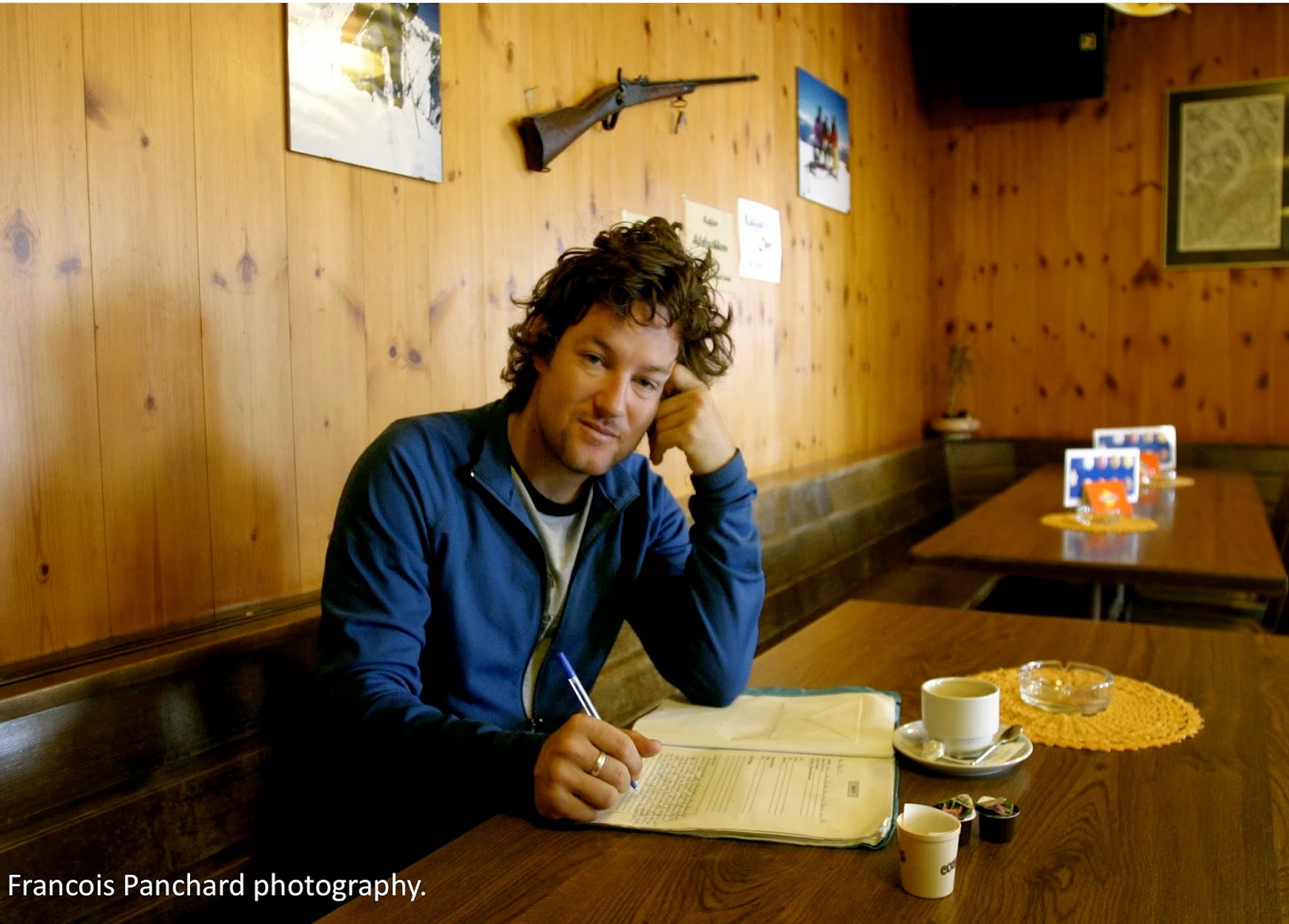
they still returned blown away by the riding. This photo is Winter
taking trip notes after a long stretch of back to back big epics in the
Alps. Tired, but very happy.
On this first exploratory trip Panchard eagerly dragged Kaye, Bowland
and Winter all over his local mountains, linking up rides with buses,
trains, lifts and a shuttle truck. Panchard’s bike that year was a 25
pound fully rigid with v-brakes that he climbed like the wind. The bikes
of choice in Whistler at the time were heavy overbuilt freeride bikes
with double-crown forks and 3” tires built for jumping off roofs and big
stunts. And jeans and flannel shirts as riding apparel. Needless to
say, the Whistler crew got worked pretty hard on that first trip, but
they still returned blown away by the riding. This photo is Winter
taking trip notes after a long stretch of back to back big epics in the
Alps. Tired, but very happy.
 In Switzerland every ride requires a map and serious logistical planning
to link the details together. Besides the amazing rides, what stood out
for the Canadians was the lack of riders they saw on any given day and
the unreal transportation network. And unlike riding in Whistler, every
ride in Switzerland is a high alpine epic accessed by a lift or paved
road usually with a cafe at the top. Each day became a top 10 of all
time. In this photo, Panchard & Blaise Mettan scope new lines in
their backyard.
In Switzerland every ride requires a map and serious logistical planning
to link the details together. Besides the amazing rides, what stood out
for the Canadians was the lack of riders they saw on any given day and
the unreal transportation network. And unlike riding in Whistler, every
ride in Switzerland is a high alpine epic accessed by a lift or paved
road usually with a cafe at the top. Each day became a top 10 of all
time. In this photo, Panchard & Blaise Mettan scope new lines in
their backyard.
 Winter was so excited about his Swiss experiences that he and Panchard
hatched up a grander adventure for the next year, 2003. Panchard dubbed
it the Crazy Canuck Freeride Challenge (CCFC) based on the ambitious
itinerary and the all-star crew of fired-up BC riders and local Swiss
riders invited. This photo shows the modest view from their digs in
Zermatt and JJ Desormeaux heading out for a day of big mountain riding
on his Chromag on singletrack that could not have been closer to the front door.
Winter was so excited about his Swiss experiences that he and Panchard
hatched up a grander adventure for the next year, 2003. Panchard dubbed
it the Crazy Canuck Freeride Challenge (CCFC) based on the ambitious
itinerary and the all-star crew of fired-up BC riders and local Swiss
riders invited. This photo shows the modest view from their digs in
Zermatt and JJ Desormeaux heading out for a day of big mountain riding
on his Chromag on singletrack that could not have been closer to the front door.
 Panchard laid out an ambitious riding itinerary that encompassed rides
that overlooked Lake Geneva to rides on the doorstep of Mont Blanc and a
long list of loops on both flanks of the Rhone valley through Martigny,
Sion, Sierre and onto Brig and Zermatt. Many of the rides had barely
seen bikes. This 2003 pic is Squamish-based Chad "The Champ" Onyschuk
hanging it out on the Dent de Morcles. A hike-a-bike to end all
hike-a-bikes that led to an extra large descent.
Panchard laid out an ambitious riding itinerary that encompassed rides
that overlooked Lake Geneva to rides on the doorstep of Mont Blanc and a
long list of loops on both flanks of the Rhone valley through Martigny,
Sion, Sierre and onto Brig and Zermatt. Many of the rides had barely
seen bikes. This 2003 pic is Squamish-based Chad "The Champ" Onyschuk
hanging it out on the Dent de Morcles. A hike-a-bike to end all
hike-a-bikes that led to an extra large descent.
 Nights on the CCFC were spent packed into his small chalet pouring over
maps, listening to techno music, drinking too much beer and wine, or
spent in a mountain hut, drinking too much beer and wine. In this
photograph night had fallen, the group had ridden a massive day and had
caught the very last lift, just in the nick of Swiss time, to an alpine
hut for the night. Panchard (second from left with beer in hand) set the
bar very high on the CCFC, and it was met with great enthusiasm as the
smiling Sean Dinwoodie attests.
Nights on the CCFC were spent packed into his small chalet pouring over
maps, listening to techno music, drinking too much beer and wine, or
spent in a mountain hut, drinking too much beer and wine. In this
photograph night had fallen, the group had ridden a massive day and had
caught the very last lift, just in the nick of Swiss time, to an alpine
hut for the night. Panchard (second from left with beer in hand) set the
bar very high on the CCFC, and it was met with great enthusiasm as the
smiling Sean Dinwoodie attests.
 Guides Joe Schwartz & Chris Winter descend the final stretch to the Hotel La Vallee
in Lourtier, Switzerland, Big Mountain Adventures' European
headquarters in the heart of the Alps. The hotel is run by the skiing
and mountain biking Pellissier family who are the warmest mountain hosts
after a big day of riding.
Guides Joe Schwartz & Chris Winter descend the final stretch to the Hotel La Vallee
in Lourtier, Switzerland, Big Mountain Adventures' European
headquarters in the heart of the Alps. The hotel is run by the skiing
and mountain biking Pellissier family who are the warmest mountain hosts
after a big day of riding.
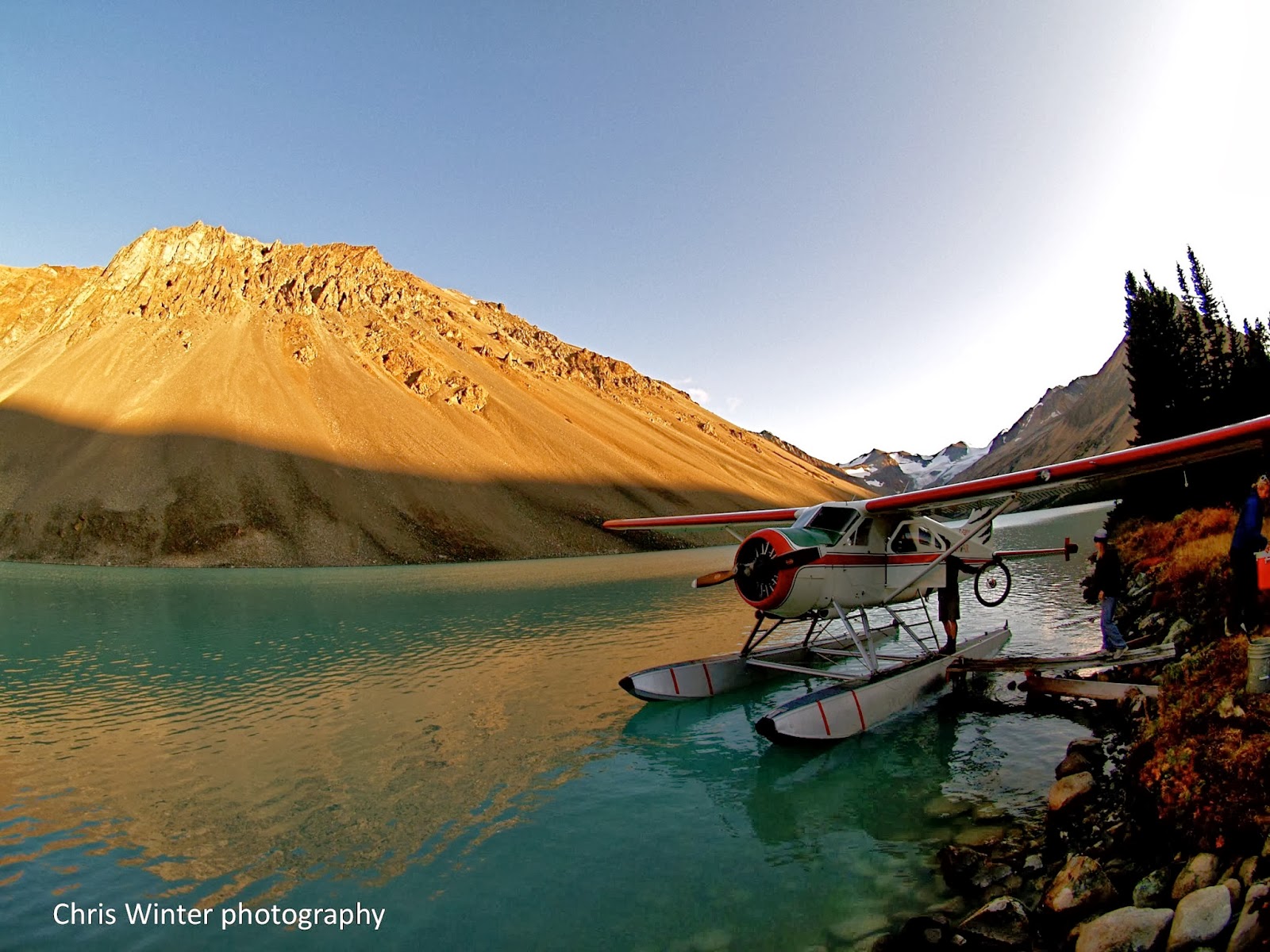
 This photo is Big Mountain Adventures' backyard, exploring deep into
BC's South Chilcotins region with good friends and a flight from Tyax
Air. BMA has spent a decade exploring some of the far reaches of the
earth in search of great singletrack and great trips. Each time the crew
returns home though, the riding and culture out its front door become
just a little sweeter. The company also run some impressive itineraries
out of Vancouver that encompass Squamish, Pemberton, Whistler, the South
Chilcotins and the North Shore.
This photo is Big Mountain Adventures' backyard, exploring deep into
BC's South Chilcotins region with good friends and a flight from Tyax
Air. BMA has spent a decade exploring some of the far reaches of the
earth in search of great singletrack and great trips. Each time the crew
returns home though, the riding and culture out its front door become
just a little sweeter. The company also run some impressive itineraries
out of Vancouver that encompass Squamish, Pemberton, Whistler, the South
Chilcotins and the North Shore.

Fall '04 was their first trip to Morocco led by Montreal-based Dave
MacDougall who’d been guiding and living in Marrakech on and off for a
decade. After an amazing eight days of remote desert riding, on a whim,
MacDougall had this first group climb North Africa's highest peak, Mount
Toubkal. A side-trip that goes down in the books. BMA knew that this
would be the first of many visits to Morocco. Here, Andrew Shandro is
seen flying high in remote mountains on the edge of the Sahara while
Vanderham carves a giant red wall while filming for The Collective.
 Early in ‘05 a big crew left the snow and rain of Coastal BC and headed
south to the palm trees Costa Rica to ride with legendary San Jose-based
guide Paulo Valle. The trip ended with a few deserved days of surf and
sun on the worldclass beaches of the Nicoya Peninsula. Since then Valle
has hosted hundreds of BMA riders and created lifelong memories. In this
photo Valle admires a killer view in his beautiful country.
Early in ‘05 a big crew left the snow and rain of Coastal BC and headed
south to the palm trees Costa Rica to ride with legendary San Jose-based
guide Paulo Valle. The trip ended with a few deserved days of surf and
sun on the worldclass beaches of the Nicoya Peninsula. Since then Valle
has hosted hundreds of BMA riders and created lifelong memories. In this
photo Valle admires a killer view in his beautiful country.
 Along with leading trips for clients, BMA also produces corporate and
media events. Here, locals Fabio Bernardi & Paolo Tossi drop down to
their beautiful hometown, Cortina D'Ampezzo while researching routes
for a Trek Bicycles event in 2012.
Along with leading trips for clients, BMA also produces corporate and
media events. Here, locals Fabio Bernardi & Paolo Tossi drop down to
their beautiful hometown, Cortina D'Ampezzo while researching routes
for a Trek Bicycles event in 2012.
 Peru remains one of Big Mountain's most popular destinations. It's for
good reason, it's one of the best places to mountain bike on the planet.
The Andes are extra grande, the second biggest mountain range the
world. Add the fact that their mountains are arid, that the Incas
happened to be master trail builders and you've got a recipe for a whole
lot of good times on a mountain bike. Rider: Justin Mark.
Peru remains one of Big Mountain's most popular destinations. It's for
good reason, it's one of the best places to mountain bike on the planet.
The Andes are extra grande, the second biggest mountain range the
world. Add the fact that their mountains are arid, that the Incas
happened to be master trail builders and you've got a recipe for a whole
lot of good times on a mountain bike. Rider: Justin Mark.
 For a number of years Big Mountain ran a mountain bike safari trip in
South Africa and Botswana where you'd ride from luxury camp to luxury
camp in a 70,000 acre game reserve. Kinda like being inside the cages of
a zoo, except without the fences. The trip is no longer, at least for
the time being. This photo is a group racing the sun back to camp. When
the sun sets in Botswana the predators come out to hunt. Lions,
leopards; a different kind of technical. It's a good thing guides carry
big-ass guns just in case.
For a number of years Big Mountain ran a mountain bike safari trip in
South Africa and Botswana where you'd ride from luxury camp to luxury
camp in a 70,000 acre game reserve. Kinda like being inside the cages of
a zoo, except without the fences. The trip is no longer, at least for
the time being. This photo is a group racing the sun back to camp. When
the sun sets in Botswana the predators come out to hunt. Lions,
leopards; a different kind of technical. It's a good thing guides carry
big-ass guns just in case.
 Mr. Wade Simmons with Chile's Villarrica volcano looming in the
background. Not all destinations have made the cut for a BMA trip. Chile
is one of them, at least not yet. It has all the features of a
world-class adventure mountain bike destination but its unique geography
makes logistics difficult and expensive.
Mr. Wade Simmons with Chile's Villarrica volcano looming in the
background. Not all destinations have made the cut for a BMA trip. Chile
is one of them, at least not yet. It has all the features of a
world-class adventure mountain bike destination but its unique geography
makes logistics difficult and expensive.
 This is mountain bike-crazy Rotorua, New Zealand. A truly great place to
ride if you get the chance. Every town planner should go to Rotorua and
take some notes in their Whakarewarewa Forest trail network. Task #1 is
to figure out how to pronounce the name. They've created an extensive
network of great trails within a concentrated area minutes from town.
Easy climbs to trail heads, trails for all levels of riders and a killer
shuttle service. The dirt there is pretty much perfect for trail
building. Lucky them. Rotorua. Rocks.
This is mountain bike-crazy Rotorua, New Zealand. A truly great place to
ride if you get the chance. Every town planner should go to Rotorua and
take some notes in their Whakarewarewa Forest trail network. Task #1 is
to figure out how to pronounce the name. They've created an extensive
network of great trails within a concentrated area minutes from town.
Easy climbs to trail heads, trails for all levels of riders and a killer
shuttle service. The dirt there is pretty much perfect for trail
building. Lucky them. Rotorua. Rocks.

Dropping down to dreamy Lahaina, Maui with Lanai island in the distance.
There are pockets of good riding on Maui but not enough to warrant
bringing your mountain bike instead of your surf board, yet. This is
local mountain bike advocate 'Moose' leading the charge on a killer
evening ride.
 Wherever they travel, Big Mountain's mission is to support the local
economy by partnering with the very best local guides and tour operators
at its destinations. It also has had the pleasure of working with a
number of celebrated guides like Joe Schwartz, Wade Simmons, Lorraine
Blancher, Paulo Valle, Wayo Stein, Andreas Hestler, Seb Kemp, Louise
Paulin and Stephen Matthews, to name just a few. Here, Kemp is right at
home on the planet's biggest mountains, on BMA's Nepal 'Himalaya
Heights' trip.
Wherever they travel, Big Mountain's mission is to support the local
economy by partnering with the very best local guides and tour operators
at its destinations. It also has had the pleasure of working with a
number of celebrated guides like Joe Schwartz, Wade Simmons, Lorraine
Blancher, Paulo Valle, Wayo Stein, Andreas Hestler, Seb Kemp, Louise
Paulin and Stephen Matthews, to name just a few. Here, Kemp is right at
home on the planet's biggest mountains, on BMA's Nepal 'Himalaya
Heights' trip.

What's in store for the next decade at Big Mountain Adventures? Continue to fine-tune and improve their current roster of destinations, develop new itineraries and keep inspiring people to ride their bikes and love our sport. The search continues...
A huge buffed-singletrack-filled thanks to all the riders who've joined BMA on trips over the past decade. And more thanks to the amazing professional photographers that have shot our trips: Sterling Lorence, Blake Jorgenson, Harookz, Chris Christie, Scott Markewitz, Dan Barham, Ian Hylands, Bonny Makarewicz, Ilja Herb, Mattias Fredriksson, Christophe Margot & Adrian Marcoux. And BMA's amazing sponsors: Trek Bicycles, Sombrio, SRAM, Chromag & Smith Optics.
This photo-essay shares a few highlights from Big Mountain Advenures (BMA), the Whistler-based mountain bike tour company that turns 10 this year. This is a brief history for Big Mountain, but really its roots started growing back in the early-70's...






What's in store for the next decade at Big Mountain Adventures? Continue to fine-tune and improve their current roster of destinations, develop new itineraries and keep inspiring people to ride their bikes and love our sport. The search continues...
A huge buffed-singletrack-filled thanks to all the riders who've joined BMA on trips over the past decade. And more thanks to the amazing professional photographers that have shot our trips: Sterling Lorence, Blake Jorgenson, Harookz, Chris Christie, Scott Markewitz, Dan Barham, Ian Hylands, Bonny Makarewicz, Ilja Herb, Mattias Fredriksson, Christophe Margot & Adrian Marcoux. And BMA's amazing sponsors: Trek Bicycles, Sombrio, SRAM, Chromag & Smith Optics.
Thursday, October 10, 2013
Trail X. Riding Costa Rica.
Trail X.
Riding Costa Rica with guide Paulo Valle.
Photos: Anthony Smith, 4color.com
Words: Chris Winter
Seen on bikemag.com
One thing that makes our sport unique is the different natural landscapes that we traverse on our bikes. Some of us ride the ancient Appalachians and its mixed forests, others spend weekends pedaling the sub-alpine of the Rocky Mountains while flowy Arizona singletrack starts on the end of some of our streets. In certain regions the land changes dramatically from one town to the next and a single ride can offer staggering diversity.
Paulo Valle (trail builder and riding guide) is just like the rest of us, he loves to ride trails and hunt for new zones. His backyard is different than anything that we have in North America. Valle, you see, lives in San Jose, Costa Rica.

For most of us, Costa Rica conjures up images of lounging half naked
in the sun on a sandy beach sipping on a cold cerveza after a surf
session. Up from the hot coastlines of the Pacific and Caribbean are
vast and rugged rainforest-clad mountains and active volcanoes make up
one of the most biodiverse places in the world. It’s not uncommon to
hear a noisy Mantled howler monkey in the forest canopy, or see a
red-eyed tree frog on a giant leaf, or a colorful Scarlet Macaw parrot
in the sky above. What people don’t know, along with the amazing
biodiversity lies an amazing web of nearly unknown hand-built trails.

As it is for most mountain bikers, land use is a challenge, and it’s no exception in this Central American country where every inch of the land is privately owned or protected and people’s idea of mountain biking consists of dirt roads. To ride good singletrack Valle has had to build his own, and to do this he’s had to network with landowners to earn their trust. Sculpting singletrack in the remote, steep and dense rainforest is no easy task. Maintaining these trails is a whole other matter in a place where tremendous buckets of water fall during the rainy season, and plants grow like they’re on steroids. After the rains stop, Valle and his team of machete-wielding locals disappear into the forest to clear the new growth and shape the newly eroded sections so that bikes can flow down the mountains. Considering the great effort that has gone into building and the lack of bikes that the trails see, one feels privileged to ride good singletrack in Costa Rica.

In his proud and understated manner, Valle has designed and diligently built an impressive web of fun and technical trails over the years. His creations reflect the way that he rides; strong like an ox on the climbs and equally so on the descents. Don’t expect to find a map or to drop into a San Jose to lead you to the goods, Valle’s had to keep his bounty under the radar to satisfy the landowners and keep the masses from schralping it. There is an exception however; you can explore the unique landscape of Costa Rica on Valle’s trails with the man himself by contacting Whistler-based guiding company Big Mountain Adventures who offer downhill and all-mountain trips exclusively with Valle.
From your backyard trail to Valle’s, we are all inherent explorers and we long to ride our bikes in new terrain.
A bit from the guide, Paulo Valle:
I’m a bit perennial rider, I been biking since I was a kid. I started riding BMX and then mountain bikes in the early 90’s. Having gears on my bike really opened a whole new world to me.
Thanks to mountain biking, I have met some great friends and travelled to many unreal places. As a former racer, what I’m most proud of is to be able to ride as much as I want without having a number plate on my bike or aiming for a finish line.
Geographically Costa Rica is a small but very intense country, you can drive coast to coast in four hours and in between there is nothing but mountains, some as high as 3,800 meters (12,400 feet). Most people come to Costa Rica for the beaches, but there are many unexplored gems higher up.
There a lot land access issues in Costa Rica. Basically, public land doesn’t exist. I wish that we had as much public land as other bigger countries, but somehow I also think that our shortage of public land makes trail riding here more special.

A great trail should be a mix of vertical drop, flow and challenge. Put it in a jungle rainforest in the middle of nowhere and it makes it even better. That’s what we ride here.
Ride in Costa Rica and you feel like the trail was built exclusively for you, on areas that even the Lonely Planet doesn’t know exists. You’ll feel the country’s real vibe from the land and the locals that helped give Costa Rica the title of the “happiest place on earth.” Pura Vida!
It’s always warm here. If you are from the northern hemisphere, it doesn’t sound too bad to take a break from freezing temperatures during the winter and go biking where the sun is shining.
Cross-country riding is actually quite popular in Costa Rica. To most of the local riders, cross country means dirt roads. Road riding is also a very big scene here.
Riding Costa Rica with guide Paulo Valle.
Photos: Anthony Smith, 4color.com
Words: Chris Winter
Seen on bikemag.com
One thing that makes our sport unique is the different natural landscapes that we traverse on our bikes. Some of us ride the ancient Appalachians and its mixed forests, others spend weekends pedaling the sub-alpine of the Rocky Mountains while flowy Arizona singletrack starts on the end of some of our streets. In certain regions the land changes dramatically from one town to the next and a single ride can offer staggering diversity.
Paulo Valle (trail builder and riding guide) is just like the rest of us, he loves to ride trails and hunt for new zones. His backyard is different than anything that we have in North America. Valle, you see, lives in San Jose, Costa Rica.


As it is for most mountain bikers, land use is a challenge, and it’s no exception in this Central American country where every inch of the land is privately owned or protected and people’s idea of mountain biking consists of dirt roads. To ride good singletrack Valle has had to build his own, and to do this he’s had to network with landowners to earn their trust. Sculpting singletrack in the remote, steep and dense rainforest is no easy task. Maintaining these trails is a whole other matter in a place where tremendous buckets of water fall during the rainy season, and plants grow like they’re on steroids. After the rains stop, Valle and his team of machete-wielding locals disappear into the forest to clear the new growth and shape the newly eroded sections so that bikes can flow down the mountains. Considering the great effort that has gone into building and the lack of bikes that the trails see, one feels privileged to ride good singletrack in Costa Rica.

In his proud and understated manner, Valle has designed and diligently built an impressive web of fun and technical trails over the years. His creations reflect the way that he rides; strong like an ox on the climbs and equally so on the descents. Don’t expect to find a map or to drop into a San Jose to lead you to the goods, Valle’s had to keep his bounty under the radar to satisfy the landowners and keep the masses from schralping it. There is an exception however; you can explore the unique landscape of Costa Rica on Valle’s trails with the man himself by contacting Whistler-based guiding company Big Mountain Adventures who offer downhill and all-mountain trips exclusively with Valle.
From your backyard trail to Valle’s, we are all inherent explorers and we long to ride our bikes in new terrain.
A bit from the guide, Paulo Valle:
I’m a bit perennial rider, I been biking since I was a kid. I started riding BMX and then mountain bikes in the early 90’s. Having gears on my bike really opened a whole new world to me.
Thanks to mountain biking, I have met some great friends and travelled to many unreal places. As a former racer, what I’m most proud of is to be able to ride as much as I want without having a number plate on my bike or aiming for a finish line.
Geographically Costa Rica is a small but very intense country, you can drive coast to coast in four hours and in between there is nothing but mountains, some as high as 3,800 meters (12,400 feet). Most people come to Costa Rica for the beaches, but there are many unexplored gems higher up.
There a lot land access issues in Costa Rica. Basically, public land doesn’t exist. I wish that we had as much public land as other bigger countries, but somehow I also think that our shortage of public land makes trail riding here more special.

A great trail should be a mix of vertical drop, flow and challenge. Put it in a jungle rainforest in the middle of nowhere and it makes it even better. That’s what we ride here.
Ride in Costa Rica and you feel like the trail was built exclusively for you, on areas that even the Lonely Planet doesn’t know exists. You’ll feel the country’s real vibe from the land and the locals that helped give Costa Rica the title of the “happiest place on earth.” Pura Vida!
It’s always warm here. If you are from the northern hemisphere, it doesn’t sound too bad to take a break from freezing temperatures during the winter and go biking where the sun is shining.
Cross-country riding is actually quite popular in Costa Rica. To most of the local riders, cross country means dirt roads. Road riding is also a very big scene here.
Saturday, August 03, 2013
Summer guide profile: Pete Gaston & Mathias Marschner
Pete Gaston, 26, lives in
Aspen, USA. When not riding in the high mountains of Colorado Pete is right at
home in the Alps. His favorite place to ride? Zermatt, Switzerland. When not
guiding for Big Mountain Adventures in Europe Pete can be found climbing and
skiing throughout the winter as a Salomon Freeskiing athlete. Pete and his brother
John also founded Strafe Outerwear, a technical snow sports outerwear
company. Pete will be co-guiding our CrossAlps trip, August 17-25 and our Swiss Cloudraker trip, September 2-10.
 |
| Pete Gaston, right at home in the Alps. |
46 year old, Munich-based Marschner did his first north to
south trans-alp mountain bike crossing in 1999. Since then he’s ridden across
the Alps annually on a variety of different routes. The route on this CrossAlps trip is the result of a culmination of these years of exploration. His
philosophy of guiding and riding are summed up in three words: bike, nature and
soul. Mathias is at the helm of this year's CrossAlps trip, August 17-25.
 |
| Mathias cleaning up before the big descent. |
Thursday, July 11, 2013
Thursday, May 02, 2013
Thursday, April 11, 2013
5 reasons why our new CrossAlps trip rocks.
We've developed a new all-mountain / enduro trip called CrossAlps that we think you'll find interesting. It goes like this: we pick you up in Munich, Germany and transfer to the Austrian ski town of St. Anton where we'll ride the next seven days through Austria, Switzerland and Italy. Local guides, four countries and a whole lot of good times. The date is August 17-25, 2013. Want to come?
5 reasons why our new CrossAlps trip rocks:
#3. Our goal isn’t to aim for greatest/longest/fastest but rather the mostest funest. Oh, we mean the most fun. That means very little asphalt, some very fun double track and singletrack jewels such as the descents from Idalp to Heidelberger Hütte, the Fimba Pass, the Corviglia FlowTrail and Lake Como’s Traccionlino as our final ‘digestive.’
#4. Yes, we use the odd lift. With some trans Alpers it’s practically the law that every single meter needs to be ridden. Not us. If a shuttle is available and brings us to great riding, we’ll take it. This means using the Swiss Red Train, some lifts or the van once in a while to increase percentage of good times.
#5. CrossAlps is not a ‘challenge’ ride where only the strongest survive and riding consists of a being in a psychological tunnel. Instead, we’ll enjoy the awesome scenery, the riding, each other’s company and the culture of each region. Be it soaking up Austria’s welcoming Tyrolean “Gemütlichkeit” vibe, enjoying Swiss perfection on the train, sipping a few Italian cappuccinos, feasting Swiss Engiadin cuisine and doing our best to learn the host of languages along the way.
 |
| Crossing the Alps one pedal stroke at a time. |
5 reasons why our new CrossAlps trip rocks:
#1.
The route does not conquer the Alps from North to South as direct as possible
like many Trans Alp routes. Instead we devised a route that passes over the
most beautiful passes and includes the best rides that we could find, even if
it means a few deviations.
#2.
We don’t end the trip in Lake Garda like most routes, but instead we cross some
of the most impressive regions of the Swiss and Italian Alps, ending on the
beach of very bella Lake Como.
 |
| Another day in paradise. |
#3. Our goal isn’t to aim for greatest/longest/fastest but rather the mostest funest. Oh, we mean the most fun. That means very little asphalt, some very fun double track and singletrack jewels such as the descents from Idalp to Heidelberger Hütte, the Fimba Pass, the Corviglia FlowTrail and Lake Como’s Traccionlino as our final ‘digestive.’
#4. Yes, we use the odd lift. With some trans Alpers it’s practically the law that every single meter needs to be ridden. Not us. If a shuttle is available and brings us to great riding, we’ll take it. This means using the Swiss Red Train, some lifts or the van once in a while to increase percentage of good times.
 |
| Zee Red Train. |
#5. CrossAlps is not a ‘challenge’ ride where only the strongest survive and riding consists of a being in a psychological tunnel. Instead, we’ll enjoy the awesome scenery, the riding, each other’s company and the culture of each region. Be it soaking up Austria’s welcoming Tyrolean “Gemütlichkeit” vibe, enjoying Swiss perfection on the train, sipping a few Italian cappuccinos, feasting Swiss Engiadin cuisine and doing our best to learn the host of languages along the way.
 |
| With great effort comes great reward. |
Tuesday, March 12, 2013
NEW Swiss DH video!
Big Mountain Adventures mountain biking in the Swiss Alps. from Big Mountain Adventures on Vimeo.
We're quite excited about this amazing video on our Alpenrock DH mountain bike trip produced by our friends at Anthill Films featuring riders Matt Hunter, Ludo May and the Godfather Wade Simmons. Sick back and enjoy!
We're quite excited about this amazing video on our Alpenrock DH mountain bike trip produced by our friends at Anthill Films featuring riders Matt Hunter, Ludo May and the Godfather Wade Simmons. Sick back and enjoy!
Wednesday, February 27, 2013
New BC mountain biking video!
This awesome video is thanks to Glen Patchet who joined us on our 8-day Sea to Sky trip out of Vancouver, Canada. This is an amazing guided mountain bike trip that features an amazing variety of riding from super-mountain-bike-friendly Whistler to the cult riding town Squamish to dusty cowboy hamlet Pemberton and the infamous North Shore mountain bike trails. This video shows the creme de la creme of the trip...the South Chilcotins. Thanks Glen! Enjoy folks...
Mountain Biking BC with Big Mountain Bike Adventures - Chilcotin Mountain Range and Windy Pass from Glen Patchet on Vimeo.
Mountain Biking BC with Big Mountain Bike Adventures - Chilcotin Mountain Range and Windy Pass from Glen Patchet on Vimeo.
Wednesday, January 23, 2013
Monday, January 21, 2013
A Sheppard, his goats and a road gap. Filming in Morocco with The Collective.
It started faintly, almost in
a whisper; a deep and monotonous humming sound. The noises became slightly melodic and blended into words
that I did not understand; then grew louder until he was fully wailing on the
microphone, blasting a successesion of words. He kept going for what seemed
like forever, chanting the hypnotic prayer that was cast at high volume from
the mosques’ towers throughout the walled city. Who on earth came up with this
brilliant idea? I thought in a half-asleep state. Whoever he is, i’m sure that
he isn’t too popular right about now. I rolled over and fought to regain sleep
and cruelly smiled as I remembered how close Darcy and Darren’s rooftop room
was to one of the loud speakers. It was pitch black outside and the city was
coming alive around us; my watch read 4:30am. Welcome to Marrakech.
Our Marrakech abode was called
a riad. Traditionally, it was a
building where several families lived with rooms and balconies looking over a
common courtyard. Lately, Europeans were buying old riads and transforming them into beautiful boutique hotels complete
with fountains, orange trees, palatial rooms and over-the-top rooftop patios
and of course lots of pillows and rugs.
 |
| Andrew Shandro putting his Trek Session to the test Morocco style. |
Leaving our riad promised instant adventure as you’d
step out and realize that the door, which you’d just closed, was identical to
the neighbors’ doors and none had any signs or numbers. To make matters more
interesting it was situated in a medieval labyrinth of twisty narrow lanes with
no structure. Numerous times I’d had to pay a local kid to help me find the way
back to our door. Minutes from our riad was
the famous Jemaa el-Fna
Square, a UNESCO World Heritage site and one of the world’s greatest
spectacles. Since Marrakech was
developed in the 11th century, the square has been a cultural
crossroad where frenetic commercial activity and entertainment attract crowds
well into the night. There is a huge range of performances and acts: story tellers,
musicians, dancers, snake charmers, glass-eaters and performing animals. A wide
variety of services are also offered, like dental care, traditional medicine,
fortune telling, preaching, astrology and henna tattooing and much, much more.
Four hours after morning
prayer we were chilling on our rooftop patio in the warm sun sipping freshly
squeezed orange juice, eating dates and discussing our proposed plan. Our group
of 11 consisted of three pro mountain bikers, Andrew Shandro, Matt Hunter and
Thomas Vanderham, four cinematographers, one photographer and four guides: nine
Canadians and two Moroccans. We were lured halfway around the globe for
Morocco’s world-class dirt, culture and landscape. The purpose of our trip was
to film a segment for the Vancouver and Whistler-based mountain bike
filmmakers, The Collective. In 2005, their self-titled debut blew the doors off
of action sports films and won best cinematography at the X-Dance Action Sports
Film Festival alongside the Sundance Film Festival in Park City Utah. They also
captured movie of the year and best cinematography at Bike Magazine’s Video
Awards. Needless to say, we had an all-star crew and cast on this trip. Our
rooftop oasis featured 360-degree views of the city below and the snow-capped
High Atlas Mountains on the horizon, which inevitably drew our imaginations to
what lay beyond teaming Marrakech.
 |
| The crew getting ready to leave Marrakech. |
Most in our group hadn’t been
to Morocco and didn’t know what they were getting into. Those of us who had
knew that patience and flexibility was paramount as things often happen on
their own schedule. Safety was also a key issue. Hucking your carcass in
Morocco was a dicey idea as proper medical facilities were basic to nil. If a
rider was seriously injured it would mean a satellite phone call to a rickety
helicopter and a flight to a run-down hospital with cats cruising the hallways.
The nearest modern medical facilities, by Western standards, were in Spain or
France. It was agreed, the riders needed to stick every stunt and ride with
confidence. We wrapped up our meeting with many questions unanswered, stepped
out of our door into the dizzying otherworldliness, packed the Land Rovers and
drove off across the plains of Marrakech.
We drove south out of the city
and climbed the Tizi-n-Tichka, North Africa’s highest pass at 2260 meters, and
down the other side to the city of Ouarzazate. A sense of déjà vu is present in Ouarzazate as it’s the site of movies like as
Laurence of Arabia, Gladiator and The Last Temptation of Christ. It’s also a
gateway to the Sahara desert, the world’s largest. Looking out over the Sahara
one can only imagine what lies between you and the other side, inexpressible
solitude, endless sand dunes and one hell of an adventure to those who attempt
to cross it. The other side is also deeper into Africa and other foreign
worlds.
For the first few days we
scoped terrain about an hour from the city in the foothills of the Atlas. The
landscape was arid, large and lonely with endless ridges and big mountain
lines. For a day and a half we drove, scoped, shot a few short lines, scoped
some more but didn’t get our teeth into anything spectacular. In the evenings
the North African light would pop, bringing features to life like a painter
with his brush. Every so often a man dressed in a jalaba would saunter past us
on a mule and wave, in the middle of nowhere.
Then we found a big road gap
in a spectacular canyon setting. After a closer look the riders agreed that the
jump was doable, but technical. The approach was a downhill roll-in, off an angled
lip that would send them 25-feet above the road and 20-plus feet to the
landing. It was the landing that was tricky: a steep 50-foot long off-camber
shelf with a loose ball-bearing surface. They’d have to make a slight direction
change in the air, then lock up the brakes upon impact, throw it sideways and
hang on tight. “Look’s good. The air’s actually pretty minor,” Shandro said
casually and matter-of-factly, ”it’s the technical and unpredictable run out
that’s sketchy. We’ll be hauling ass coming down this landing ramp and throw in
the fact that were in the middle of nowhere, in the middle of Morocco and the
difficulty level goes up considerably.”
We returned early the next day
and worked on the landing while the cinematographers found camera angles. As
the riders rolled into the lip over and over and discussed the variables a
Sheppard, his dog and fifty or so goats sauntered up the valley. What an
amazing sight; a head-on collision of contrast. The Sheppard layed his walking
stick down and grabbed a seat on a rock while the goats spread out to nibble on
the sparse growth. The cameras were in position, the wind subsided and silence
fell in the small valley. Then the call came over the radio. ”OK, im dropping
in 10.” Vanderham rolled in and launched the air with total coolness, tweaked
his bars in the air just as he’d planned and swooped in for touch-down. He
overshot the landing by a good eight feet but stuck it. His bike let out a big
‘whomp’ when it hit the earth followed by a rush of air as he accelerated down
the steep shelf. The crew erupted as whoops and howls that echoed off the
canyon walls. Shandro went next and made it look easy. Hunter, who had had a
close friend get seriously hurt earlier in the summer on a similar feature, dug
deep within himself and stomped it. None of the riders did the air twice.
 |
| A sheppard and his flock. Photo: Dave McDougall. |
The Sheppard seemed neither
here nor there about the whole spectacle. He seemed without reaction. Did he
even care? Or was the sight of a bicycle flying off a cliff so otherworldly
that it was beyond him? Thinking back, im not even sure if he was facing the
jump or not. He might have actually chosen that spot to rest. Either way, he
grabbed his stick and walked off with his goats trailing. Meanwhile, one of our
drivers, Achmed, was in the distance and on his knees, facing Mecca and praying
to Allah as he did five times a day.
That afternoon we feasted on tagine that our drivers had been brewing
on fires. The tagine is a slow-cooked
stew of meat, prune and vegetable that’s a staple in Morocco. Our driver’s
genuine warmth and kind-heartedness was present all the time as they worked
tirelessly for us and always with a smile. They were also fluent in Arabic,
Berber and French, which made communication with all Moroccans possible. After
lunch we relaxed and laughed knowing that we had some key footage in the can.
The next day we rolled up to a
new location after a full day of driving and the group pilled out of the Land
Rovers, eager to scope new features. Without hesitation they fanned
out and descended the hillside like skiers on a powder day. This
time we were in the Ouirgane Valley, a greener area in the heart of the High
Atlas with staggering views of Mount Toubkal, North Africa’s highest peak at
4167 meters, It was late afternoon and the sun was filtered through a light
mist creating a dreamy pastel light. With pine trees and red and eroded hills
in the foreground, peaks in the distance with a hilltop town perched on its
flanks, the view was reminiscent of a Tuscan oil painting except for the Muslim
minaret poking out of the town like a statue.
“This place is unreal,”
photographer Sterling Lorence said as he ran up a small hill to see what was on
the other side. “It’s a dream landscape with the most beautiful backdrop ever.
You could blast off that bush, hit this LZ, snake around that rock and pin it
into the hip,” he said excitedly to Vanderham while spinning his hands as if he
was holding a toy bike. Vanderham barely had time to answer and Lorence would
already be on the top of another mound of dirt ten feet away inspecting the
line from another angle. Lorence is a key player in the process of finding a
line or feature, and shooting it. His background as a mountain biker combined
with his vast experience shooting the best riders makes him a Shinobe of line
dissection.
 |
| Very comfortable digs on the edge of the Sahara. |
Watching a rider fly through the air in a film is
the end result of a lengthy process of many elements that come together.
Initially, a line or feature is found by a rider or suggested by the
photographer or cinematographer. Upon closer inspection the cameramen make sure
that it receives good light at some point during the day - the best light being
early morning or late afternoon. Then the crew digs and shapes the run-in,
jump, and landing to ensure that the line is safe and doable. The next step is
finding the best angles to shoot from, which speed to shoot the film and which
lenses to use. Meanwhile the riders continue hammering out the intricacies of
the feature and the variables to make sure that they nail it: speed, pop,
braking, pedaling and external factors like wind and tricky surfaces to
negotiate are taken into consideration. And, each line that is shot needs to be
unique and fit into the rider’s segment and complement what has already been
captured. Lastly, each line’s overall safety needed to be assessed, especially
when working in a remote region.
The next day we gabbed our sad
and decrepit Moroccan tools and started working on the first shot: a large
step-down hip jump into a step-up hip jump. The soil was firm yet workable, the
perfect consistency for shaping. The in-run was fast and
straightforward with a transition long enough to land a Cessna while the second
jump’s landing was trickier and off camber. The whole line made for a beautiful
shot: long, flowy and dynamic with endless camera angles. Hunter hit the line
in his Kamloopsesque no-frills-balls-to-the-wall style. He’d chosen an
alternate route off the step up where he’d land and dive down a steep technical
chute. Vanderham has an uncanny way to use his body like a spring. He’d pop
like a gazelle and be sailing considerably higher and further than the other
riders. With his arms extended and ultra smooth style he’d table his Rocky
Mountain RM7 slow and big and land it like he was hopping off a curb. Vanderham
is unreal to watch. Shandro was hitting the linked airs like a knight on his
white Trek Session 10, assertive and stylee.
In the distance prayer began
playing from a minaret in a hillside town. The eerie barely audible droning
echoed from the mountains that afternoon as our 16-millimeter cameras whirled,
shutters clicked and big bikes sailed through the air.
By Chris Winter, Big Mountain Adventures.
Subscribe to:
Posts (Atom)

 Posts
Posts

